Healthcare Science (Medical Engineering), BSc (Hons)

Discover Swansea at our next Open Day

Book your place today
medical engineering

Course Overview

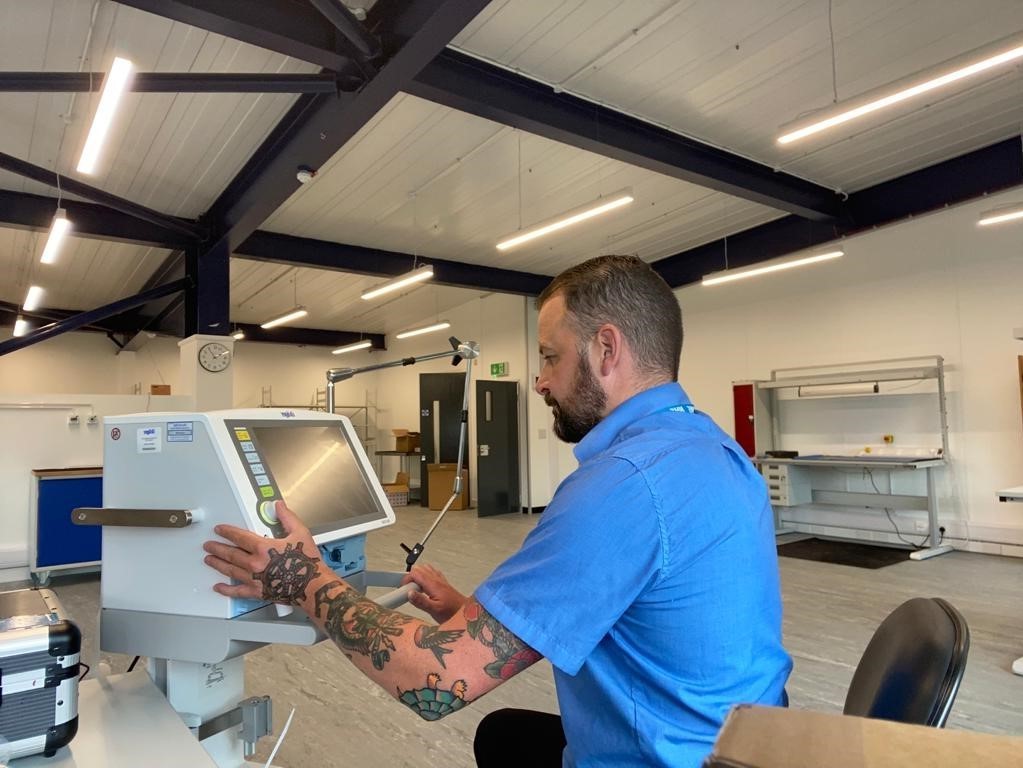
Our BSc (Hons) Healthcare Science (Medical Engineering) gives you the clinical, technical and problemsolving skills needed for a rewarding career as a medical engineer. You will take on a handson role working with medical devices used across healthcare settings (e.g. for radiotherapy treatment), ensuring that vital equipment is safe, effective and reliable for patient care.  

Throughout the degree, you will learn about the full medical equipment lifecycle, from acceptance testing and introducing new devices into service to advising clinicians on correct use, addressing patient safety issues and managing the safe disposal of older equipment. You will combine in-depth academic study with practical clinical and technological experience in specialist healthcare environments. 

Medical engineering is an exciting and varied role where you will apply knowledge from electronic and mechanical engineering to assess, maintain, modify and, in some cases, help design medical devices used in patient treatment and diagnosis. It is an exciting, continually developing field that requires a high level of responsibility and technical skill. 

This programme combines theoretical learning with practicebased experience at FHEQ Levels 4, 5 and 6. It has been commissioned and funded by Health Education and Improvement Wales (HEIW), with clinical placements delivered across health boards (HBs) in Wales. 

Why Medical Engineering at Swansea?

Studying Healthcare (Medical Engineering) at Swansea means learning in an environment designed to support both your academic development and your professional preparation. You will benefit from access to our excellent facilities, including a realistic clinical suite where you will be able to put your knowledge into practice and gain confidence in an environment that mirrors real healthcare settings, helping towards your experience when you go on placement.  

Your learning will be based across two locations: our Singleton Park Campus, set on the edge of the beautiful Gower Peninsula, and through practice learning placements in specialist healthcare settings, where you will gain handson clinical experience and apply your skills with real patients and multidisciplinary teams. This blend of campusbased study and clinical training ensures you graduate ready for the workplace.  

You will be taught and supported by our experienced academic staff, many of whom are practising healthcare scientists. Their combination of scientific expertise and professional insight means you will learn from people who understand the realities of medical engineering and the evolving needs of patients and services. 

Many of our academic staff are also practising healthcare scientists, providing an unrivalled combination of scientific rigour and professional expertise. 

Your Medical Engineering experience

During your studies, you will experience a rich blend of academic, clinical, and handson learning designed to develop your confidence and professional readiness as a medical engineer. The programme combines taught theory with extensive practicebased learning, allowing you to apply engineering principles directly to real healthcare challenges.  

Placement learning is an essential part of your experience, and you will undertake clinical placements across Health Boards in Wales. These placements give you the opportunity to apply your engineering knowledge directly to real healthcare challenges while working alongside clinical scientists, technicians and multidisciplinary teams. 

Your placements will expose you to a wide range of medical equipment used in hospitals, from monitoring and diagnostic technologies to therapeutic and lifesupport devices. Under the supervision of trained Clinical Educators (CEs), you will take part in activities such as equipment acceptance testing, device maintenance, safety checks, and supporting the introduction of new technologies into clinical service. 

Before each placement you will take part in simulationbased preparation using our immersive learning facilities, including our state-of-the-art Simulation and Immersive Learning Centre (SUSiM), ensuring you develop practical skills in a safe environment first. During your time on placement, you will receive consistent support from your Clinical Educator, the University’s Clinical Learning Facilitator, and your personal tutor. 

Medical Engineering Careers

Medical Engineering graduates are in high demand across Wales and the wider UK. The programme has been commissioned by Health Education and Improvement Wales (HEIW) in direct response to workforce planning, with NHS organisations identifying an urgent and growing need for trained medical engineers. 

Most graduates progress into Band 5 Medical Engineering or Clinical Engineering roles within the NHS. As your career develops, you can move into specialist, senior or managerial roles, or work in research, education, or the medical devices industry. 

Throughout your degree, you will receive employability support from the Healthcare Science employability lead, including CV writing, interview preparation, and networking with NHS mentors and prospective employers during placements. Your clinical portfolio and extensive practice experience also give you a strong competitive edge. 

Modules

We're currently reviewing our curriculum to enhance your learning experience and embed skills that will benefit your future career. This means that some modules may be subject to change.

Entry Requirements

We consider all applicants on their own merits and welcome applications from students with a wide range of qualifications.

From Steel to Study: A Journey into Medical Engineering

Meet one of our inspiring students, Jason Bailey, who made the leap from the steel industry to the world of medical engineering. After years working at Tata Steel, he decided to pursue a new path studying BSc in Healthcare Science, combining hands-on experience with a passion for helping others. His story shows that it’s never too late to change direction, and that real-world experience can be a powerful foundation for academic success. 

Healthcare Science (Medical Engineering), BSc (Hons)