
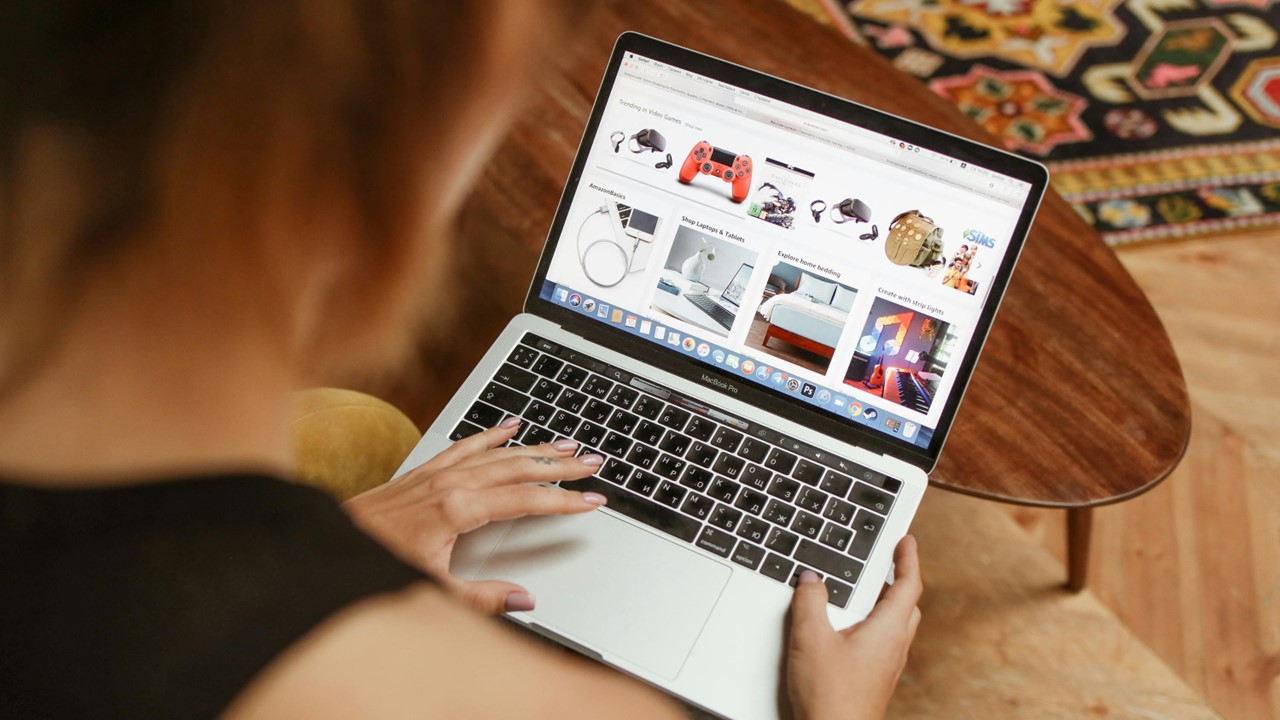
Black Friday is here and Christmas is coming – bringing store shelves and websites packed with tempting items plus TV adverts and promotions to get us spending to ensure we have a perfect festive season.
But what happens if you haven’t got the money to make those purchases? Rather than going without, many shoppers are turning to buy-now-pay-later (BNPL) schemes – laying down a small amount and committing to pay the rest in instalments
With more of us choosing to shop online, it has never been easier to buy things at the touch of a button, with the option to pay in full or via deferred payment services, like Klarna.
Now a new project involving Swansea University seeks to find out how people cope with their shopping payments and what more can be done to help those most at risk avoid the pitfalls of debt.
Dr Anita Zhao, from the School of Management, said: “This project will see us create a toolkit to help financially vulnerable or overindebted BNPL users in South Wales and beyond. We don’t know yet what form these tools will take, but we aim to gain a better understanding of how we can work with debt advisors and those in debt to provide the right kind of support.”
With funding from the University, Dr Zhao and colleagues Dr Philippa Ward and Dr Ruffin Relja from the University of Gloucestershire are appealing for both people in debt and financial debt advisors to come forward to help with the project.
Over the past five years their research has revealed that the BNPL option is most appealing to Millennials and Generation Z. They are young (on average 32 years old) primarily female, and half earn less than £30,000 a year.
Dr Zhao said: “Many buyers feel they are merely using their own future money for the purchases and don’t think of it [BNPL] as a form of credit.
“The problem is BNPL is currently not regulated in the UK. Unlike a credit card where a lender receives a monthly statement for all their spending, BNPL is used for individual transactions so a shopper may have made numerous purchases that all require payment of different amounts at separate times.
“This can become very messy. Unless you are financially aware, it is easy to lose track of spending.
“While some users are very positive about the freedom that fintech services, such as Klarna, provide, others who may not be as financially astute are running into difficulties. There is an instant gratification to spending online, but the pain of debt lasts far longer. Those lacking self-control are more likely to be caught in a cycle of pain and vulnerability.”
Dr Zhao has already linked up with the Money Advisory Liaison Group (MALG). This body brings together organisations working to improve the lives of people with problem debt and is eager to hear more from those involved in debt support.
“We are conducting a survey and want to engage not only with those who may have encountered problems with their BNPL debts but also the financial advisors who seek to help them. We want to discover what we can do to provide better support. South Wales is economically quite deprived, so preventative resources might be particularly beneficial to many here.”
The researchers have also been involved in drafting a response to the Financial Conduct Authority's plans to introduce greater controls for lenders in 2026.
She added: “Our role as marketing researchers allows us to offer valuable insights into the broader impacts of proposed regulatory changes for both consumers and markets. This area of the market is not regulated at the moment, so these rules could bring greater protection for shoppers.”
Take part in the survey to help with the team's research.
Learn more about the School of Management