
Microbiology and Immunology, BSc (Hons) / MSci (Hons) / BSc

Discover Swansea at our next Open Day

Book your place today
Microbiology and immunology

Course Overview

Microbiology is the branch of science that focusses on the study of microorganisms, exploring all forms of microscopic life from bacteria to fungi, protozoa, and even the non-living viruses. This programme will focus on the structure, function, and behaviour of these microorganisms, how they interact with their environment, their ability to cause human disease, and their potential for industrial applications.

Immunology is the field of science that unravels the complex workings of the immune system. It encompasses the investigation of the body's defence mechanisms against foreign objects, such as microorganisms, as well as its role in maintaining health and preventing diseases. A key aspect of immunology is how the body distinguishes between self and non-self entities, and what happens when they body gets this wrong. This knowledge allows therapeutic and vaccine development for the treatment of various immune-related disorders and infectious diseases.

Our interdisciplinary degrees bring these two areas together, focusing on how they interplay with one another in response to infectious diseases as well as considering disorders that occur as the result of a malfunctioning immune system. Industrial and research applications, such as the development of novel antimicrobials, and innovative immuno-therapeutics will root the programme in real-world applications.

Microbiology and immunology represent disciplines that are not only fundamental to our understanding of health and disease but are also integral to various industries. There is a growing demand for experts in these fields, driven by an increasing focus on healthcare, biotechnology, pharmaceuticals, and the broader life sciences sector, translating into excellent prospects for our graduates.
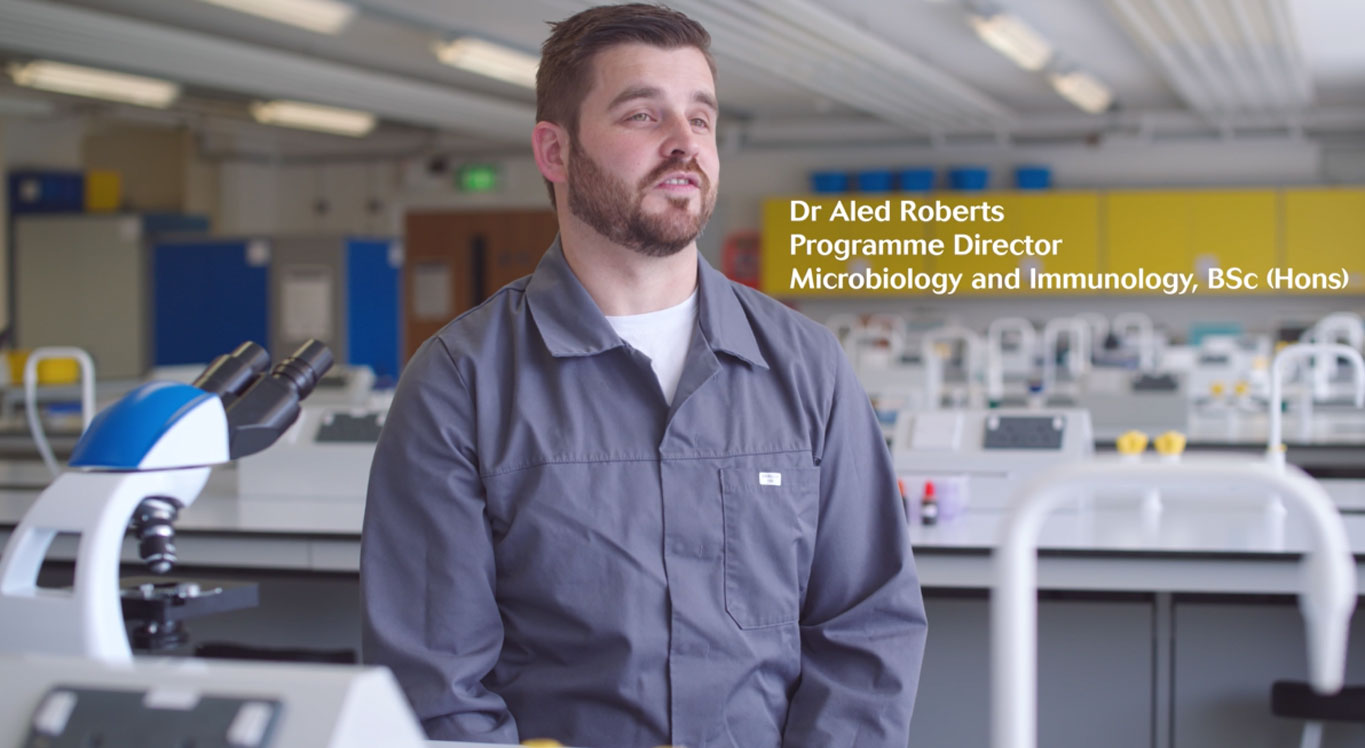

Why Microbiology and immunology at Swansea University?

Our BSc Microbiology & Immunology degree is structured to develop both independent and collaborative working skills, alongside a strong foundation in critical thinking, data analysis, and problem-solving. Core and subject-specific modules include a wide range of contemporary practical sessions that will immerse you in laboratory-based microbiological and immunological techniques, experimental design, and the application of the scientific method to real-world biological problems.

You will benefit from access to the state-of-the-art research facilities at the Medical School, including bioanalytical equipment such as DNA and protein analytical equipment, flow cytometry for cellular characterisation, real time cell metabolism analysis and computer-based image analysers for molecular and cellular studies.

You will also be taught by researchers working in the fields of microbiology, immunology and bioinformatics, providing you with access to real life, working examples of research in practice.

Your Microbiology and immunology experience

Studying the 3-year BSc, you will undertake a mix of compulsory and optional modules, giving you the ability to tailor your degree to your particular interests, career ambitions, or plans for further study. You will also hone your independent research skills by undertaking a 'capstone project' in the field of either microbiology or immunology. This project will be an opportunity for you to apply the entirety of your knowledge and skills, contribute to scientific discoveries and demonstrate your ability to function as active members of the scientific research community.

This programme includes opportunities to undertake Year Abroad, spent in locations such as the USA, Canada, China, Hong Kong, or Singapore, enhancing your learning and offering invaluable life experience.

This course also offers you the opportunity to spend a Year in Industry, in the UK or overseas, enabling you to gain valuable workplace experience. The University advocates for paid-only placements, which on average have a salary of over £20,000. Unpaid placements are considered on a case-by-case basis.

This programme is also available as a 4-year MSci, which is an advanced undergraduate degree, adding a further research-focused year to your degree. Our MSci leads to a master’s level qualification, in addition to your undergraduate degree, giving you expert scientific training and a springboard towards a range of specialist careers.

The optional Foundation Year for this programme can give you an exciting introduction to higher education, setting you up with the skills, confidence, and knowledge that you’ll need to be successful in your undergraduate degree. It’s ideal if you need a little more support after further education, or are returning to education after a gap. Following successful completion of the Foundation Year, you will progress onto Year 1 of your BSc.

The curriculum and programmes are designed to prepare students with the skills and attributes needed to become proficient and competent scientists and researchers. Our programmes will enhance your creative problem-solving abilities and encourage innovation in research.

Microbiology and immunology employment opportunities

Post‑graduate career prospects for this programme are broad and varied, extending well beyond the research‑focused roles typically associated with this degree. A qualification in Microbiology and Immunology provides access to a wide and versatile range of exciting career paths across numerous fields, including:

  • Academic and Medical Research
  • Pharmaceutical development
  • Biotechnology
  • Biofuels
  • Education
  • Agriculture
  • Bioinformatics
  • Further studies

Modules

We're currently reviewing our curriculum to enhance your learning experience and embed skills that will benefit your future career. This means that some modules may be subject to change.

Entry Requirements

We consider all applicants on their own merits and welcome applications from students with a wide range of qualifications.

Microbiology and Immunology, BSc (Hons)

Microbiology and Immunology, MSci (Hons)

Microbiology and Immunology with a Year Abroad, MSci (Hons)

Microbiology and Immunology with a Placement Year, MSci (Hons)

Microbiology and Immunology with a Foundation Year, MSci (Hons)

Microbiology and Immunology with a Foundation Year, BSc (Hons)

Microbiology and Immunology with a Placement Year, BSc (Hons)

Microbiology and Immunology with a Foundation Year and Placement Year, BSc

Microbiology and Immunology with a Year Abroad, BSc (Hons)

Microbiology and Immunology with a Foundation Year and Year Abroad, BSc (Hons)