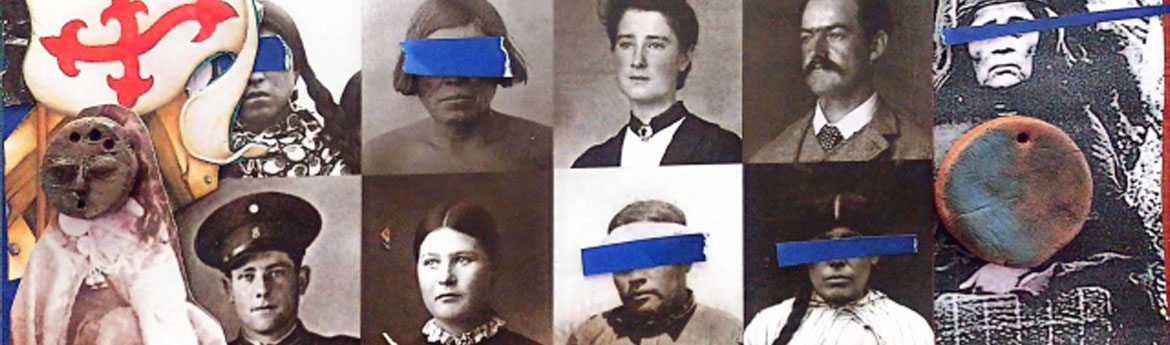
Image credit: ‘De-mapping the Feat’, Nadia Pissano Paileman
We are exploring Indigenous perspectives on Patagonia
In 1865, a Welsh settlement was established in Patagonia, enticed by the Argentinian government's aggressive appeal for European immigration. For generations, people in Wales have celebrated this as a story of resilience and intercultural harmony - but just how accurate is that assessment?
The scarcity of Indigenous perspectives in historical archives has led scholars to produce unilateral narratives. These accounts elevate Welsh heroism and tenacity while relegating Indigenous peoples to the periphery of their own history.
A collaborative team, led by Dr Geraldine Lublin and the research group GEMAS (Grupo de Estudios sobre Memorias Alterizadas y Subordinadas, a research network focused on subordinate memories), is challenging this perception by switching the focus to Indigenous experiences and disrupting long-standing assumptions about the range of voices which deserve to be heard.
This important work responds to Mapuche Tehuelche communities' calls to ensure their voices are included, confront dominant narratives and address the historical underrepresentation of Indigenous experiences.
Reclaiming The Narrative
The research team issued an open call for creative works that explored Indigenous views on Patagonian history and the impact of colonisation.
Contributions were received from across Chubut, sharing life stories, testimonies and memories that had previously been overlooked or marginalised. Four inspiring community-led projects emerged from these responses and are now showcased in a digital exhibition accessible to viewers worldwide.
The powerful trilingual digital exhibition is hosted by the National Library of Wales, bringing history to life through music, poetry, aural testimonies and performances that offer a new lens on the history of Chubut. By diversifying the perspectives we can access, this exhibition encourages us to question one-dimensional narratives and to listen to voices that have been overlooked in historical records.
A Future Of Equitable History?
The launch of the exhibition coincided with the 160th anniversary of the arrival of the first Welsh contingent to Patagonia, providing space for reflection about what that settlement meant for all communities involved.
This challenging of unilateral narratives and perceptions is aligned with the Welsh Government's vision of an anti-racist Wales, where a multitude of perspectives is celebrated and Welsh history is studied in all its 'diversity and complexity'. By partnering with Wales Arts International and its Gwrando programme - which enables Welsh artists to deepen their understanding of Indigenous languages and heritage - the initiative also advances the mission of the UN Decade of Indigenous Languages.
The project will also support the delivery of the Curriculum for Wales, encouraging young people to critically engage with history and listen to voices that have been marginalised in historical records.
Ultimately the project's most significant impact is best expressed through the words of the Indigenous people involved as their voices take centre stage in the telling of their own story:
"... Reaching you with our zungun, our voices, our songs, our histories, becomes extremely significant, because that is our newen, our strength. But also, as we said when we first performed this project, there is a reciprocal back and forth where whoever listens, whoever receives these voices, gives part of themselves, their time, their attention. They open a little sliver of their minds and their hearts to keep what comes to them, and to continue sharing and replicating it. In this there is also newen." Iván Paillalaf, Chacay Oeste - Laguna Fría community, Chubut, Argentina
"I am grateful to those who gave us the opportunity to tell how we really lived and how our ancestors lived, until today... Thank you Thank you Thank you..." Agustín Pichiñan, Pichiñan lof of Cerro Condor, Chubut, Argentina
Credit: AHRC IAA (Arts & Humanities Research Council Impact Acceleration Account)